ABOUT
Powering Health Justice
This guide was created by community organizers, grassroots groups, and community members nationwide that prescribes real, tangible ways we can improve health outcomes for everyday people – especially Black, brown, and poor people.
Over two years, we spoke with hundreds of people about our healthcare system, hosting over 50 listening sessions with groups nationwide to determine: What’s going on? And how can we actually make people well?
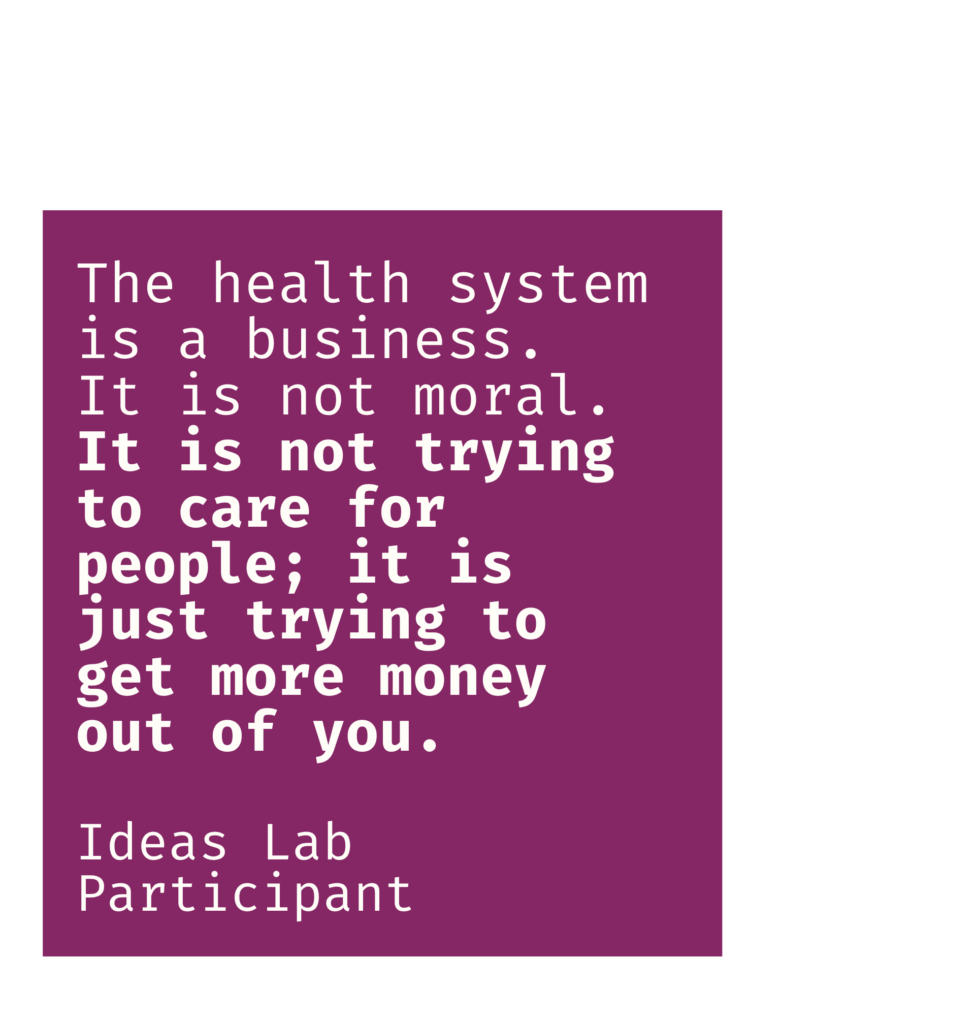
What we found was a deep need to shift power away from corporate, profit-driven interests and put it back into communities' hands.
The only answer is to build our solution from the ground up. We need a system designed by us, for us – rooted in community power and accountable to the people it serves. The point should be to care for people, not exploit and discriminate against them. Our health — and our lives — are too important to allow a healthcare system that has failed to stay in place.
Priority Areas

PROGRAM
The Ideas Labs
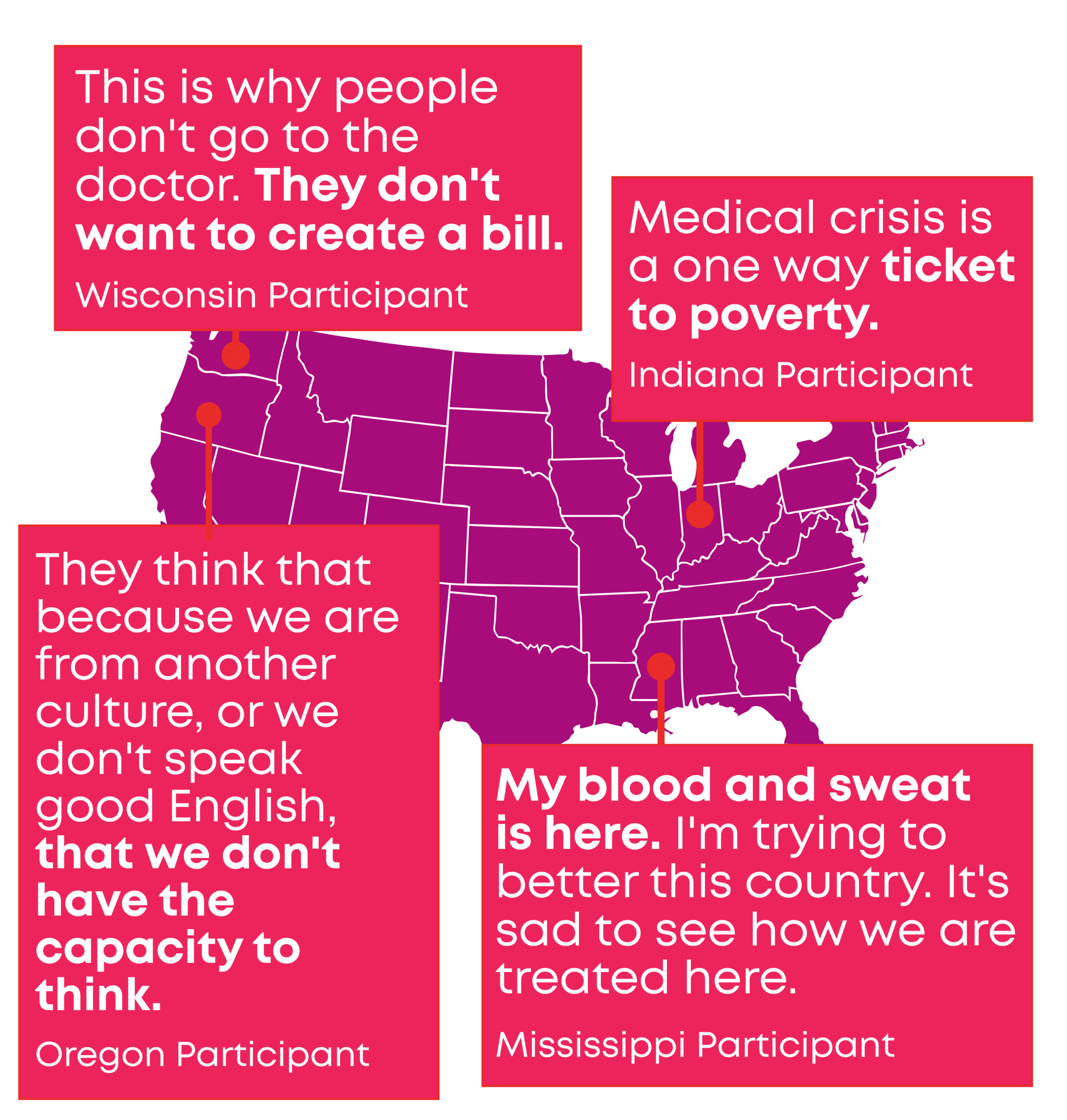
The Ideas Labs are a series of community-led conversations organized by Community Change and Powering Health Justice to center the voices of those most impacted by America’s broken healthcare system. From 2024 to 2025, more than 40 labs were conducted across 32+ states and Washington, DC, bringing together patients, healthcare practitioners, community organizers, and advocates to share their lived experiences and envision transformative solutions.
Participants described a healthcare system that too often prioritizes profit over people—where medical debt ruins families, racial bias determines who gets believed and treated, and language barriers leave immigrants navigating care alone. From a 7-year-old translating for her deaf immigrant mother in Florida to a Black woman discharged while septic in Louisiana, the stories reveal deep inequities that demand urgent action.
Partner Organizations & Institutions
This project was led by Community Change, Cornell University, and Grassroots Solutions, thanks to generous support from the Robert Wood Johnson Foundation. It would not have been possible without the following partner organizations.